Water Meter Running With Everything Off? A Five-Minute Test
If your water meter keeps moving while every tap is closed, water is leaking somewhere on your side of the meter. A five-minute test separates a leak inside the house from one on the buried line, and tells you who to call first.
What a Moving Meter Actually Means
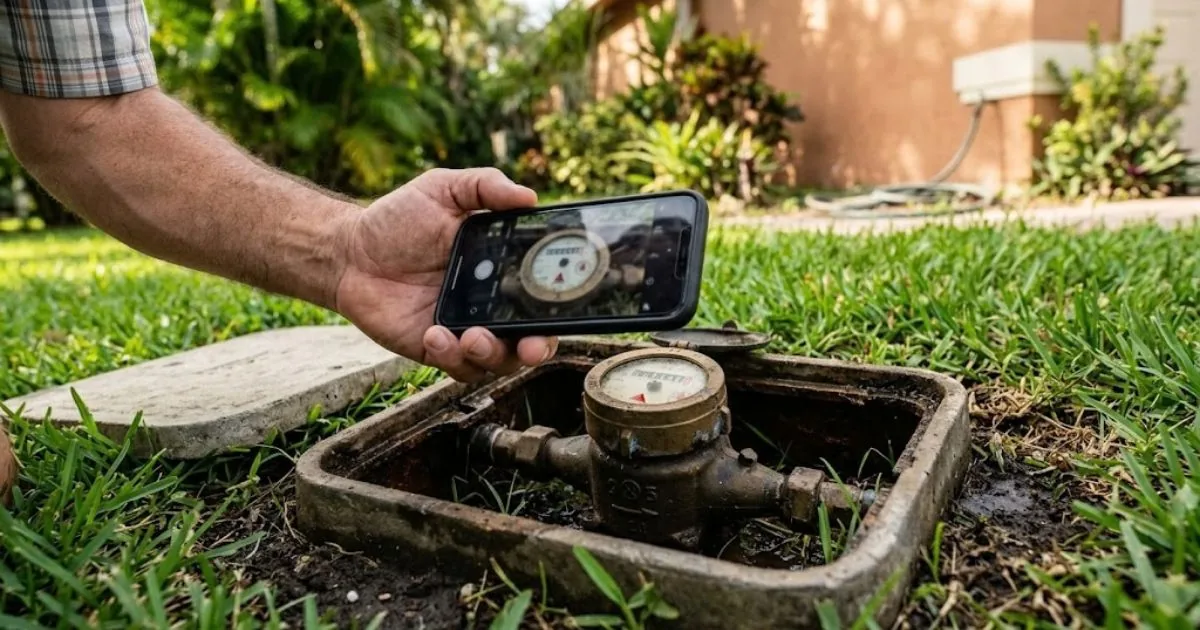
A residential water meter counts every gallon that passes through it. If nothing in the house is using water and the dial or the small leak indicator still turns, water is escaping from a pipe, a fixture or an appliance somewhere downstream of the meter.
Most meters have a small triangle or wheel that spins with even a trickle. Slow movement points to a small leak, and a steadily advancing dial points to a larger one. Neither is normal, and neither fixes itself.
In Hollywood the meter box usually sits near the street or the property line, under a lid. Lift the lid carefully, watch for insects, and brush away dirt with a gloved hand.
The Test
How to Run the Test in Five Minutes
- 1
Stop all use
Turn off taps, ice makers, irrigation and appliances.
- 2
Read
Note the dial and the leak indicator.
- 3
Wait
Wait ten minutes without using water.
- 4
Compare
Any movement means a leak.
Next, close the main shutoff valve at the house, which is often on an outside wall or in the garage, and read the meter again. If the meter now stops, the leak is inside the house. If it keeps moving, the leak sits on the buried line between the meter and the house.
Where the Water Is Probably Going
| Test result | Likely location | What to check next |
|---|---|---|
| Stops after closing the main valve | Inside the house or yard fixtures | Toilets, water heater, supply lines, irrigation |
| Keeps moving after closing the main valve | Service line between meter and house | Wet patches in the yard, low water pressure |
| Moves in short bursts every few minutes | Toilet flapper or fill valve | Dye test with food coloring in the tank |
| Moves only on the hot side | Water heater or hot line | Moisture around the tank, warm floor spots |
The Cheapest Leak to Rule Out First
Toilets cause more hidden water loss than any other fixture. According to the EPA, a leaking toilet can waste about 200 gallons a day, and its estimates put the average household's leaks at nearly 10,000 gallons a year.
Drop a few drops of food coloring into the tank without flushing. If color appears in the bowl after fifteen minutes, the flapper is leaking and a new one costs very little. A flapper replacement is a simple job for most homeowners.
Why This Matters More in Hollywood Now
Hollywood's commission approved a five-year rate plan in July 2026. Axios reported the typical water-only bill rising from about $33 a month to more than $68 by 2031, with water and sewer combined climbing from roughly $99 to $223.
A leak that costs $30 a month today costs more each year as rates rise, and the sewer charge is billed on water use even when the water leaked into soil. Acting early is cheaper.
Reading the Dial Without Guessing
Meters come in two common styles. A sweep-hand meter has a thin pointer that circles a dial, and a digital or odometer-style meter shows a row of numbers like a car mileage display. Many meters also include a leak indicator, a small triangle or star that turns whenever any water passes through.
Read the numbers, not just the pointer. Write down the full reading, wait fifteen minutes with all water off, and read again. The units may be gallons or cubic feet, and a cubic foot is about 7.5 gallons, so do the conversion before you estimate waste.
Take a photo of the dial each time. A dated photo shows the utility, your plumber and your insurer exactly what you saw.
The Usual Suspects, in Order
Toilets come first, because a flapper that does not seal can run unseen for months. Irrigation systems come second, since a cracked valve or broken head can run on a timer without anyone watching. Third is the water heater, where a stuck relief valve can drip into a drain pipe with no visible puddle.
Next are supply lines behind washing machines and refrigerators with ice makers, followed by a leaking water softener or filter. Last come the hidden leaks, which sit in walls, under slabs or on the buried line.
Work through the list from top to bottom. The first three are often cheap to fix, and finding them first can save a diagnostic visit.
Mistakes That Waste the Test
- Leaving an ice maker, dishwasher or irrigation timer running during the test
- Reading the meter once and assuming it moved because of the wind or a neighbor
- Closing the utility's meter valve instead of your own main
- Skipping the toilet dye test because the toilet looks fine
- Waiting for a bill to confirm what the meter already shows
Renters and Landlords
A tenant who sees the meter move should tell the landlord in writing, with the photos and the date. Many leases make plumbing repairs the landlord's responsibility, though a tenant who caused damage may be liable.
Landlords should respond quickly. A running leak can damage a unit below and raise the water bill for the whole building, and delay makes both worse. A dated record of the report and the response protects everyone.
When to Call and What to Say
If the toilet test is clean and the meter still moves, call a professional. Say whether the meter stopped when you closed the main valve, because that narrows the search before anyone arrives. Our leak detection visits start with the same meter and pressure tests, and add acoustic gear when the location is still unclear.
If a leak has already wet floors or drywall, dry the area quickly. Water damage restoration work handles extraction and drying, and older Pembroke Pines houses built on slabs are a typical place for them. See our Pembroke Pines page for local housing details.
For an active leak right now, close the main valve and call (954) 697-4920.
Questions
Quick Answers
Yes. Lift the meter box lid, read the dial and look at the leak indicator. Do not operate the utility's valve at the meter, because that is the utility's equipment.
No. The meter counts every gallon that passes, which is why a leak shows up on your bill.
A slow movement still means water is leaving the pipes. Small leaks add up, and they get worse over time.
If water is pooling or the meter is spinning quickly, close the main valve and call. A slow leak can wait for a daytime visit.
Meter Still Moving After the Test?
Call and give the dispatcher the two readings you took.
Call (954) 697-4920