Septic Tank Pumping in Hollywood, FL
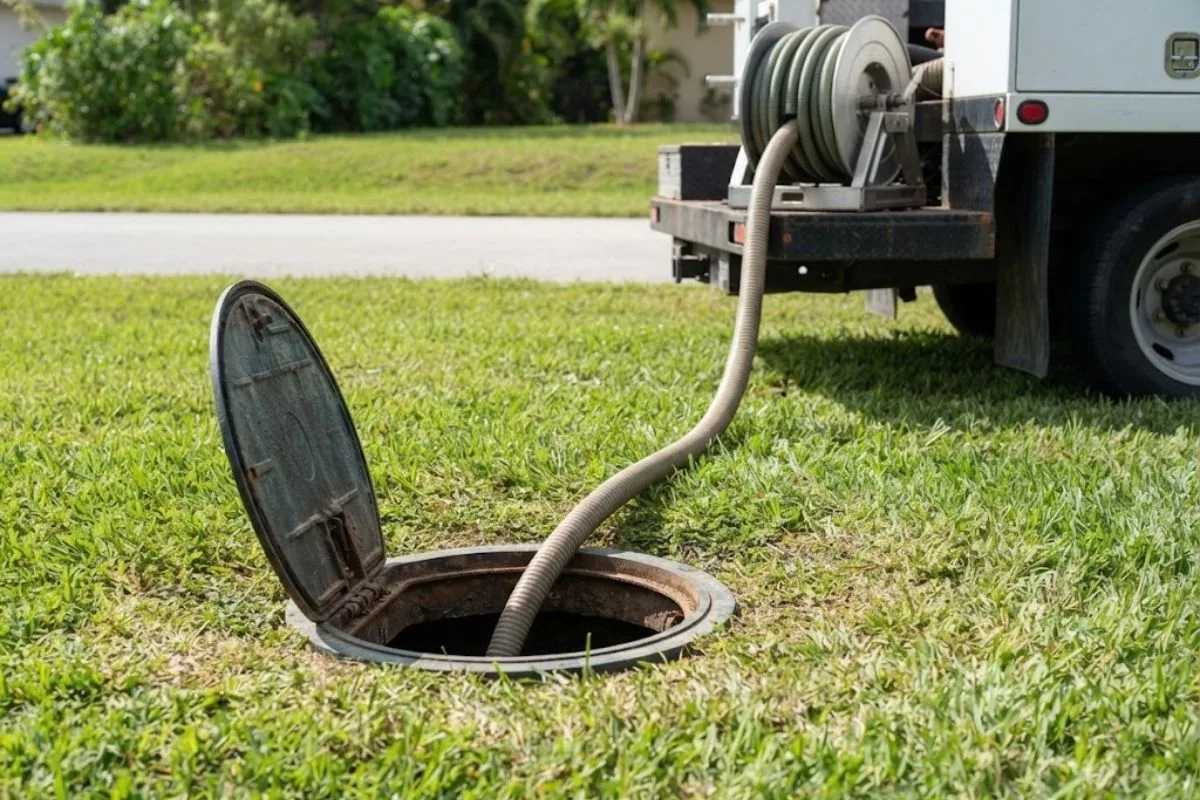
Septic tank pumping in Hollywood, FL removes the sludge and scum that build up in your tank so wastewater can keep flowing to the drain field. Call (954) 697-4920 for pumping, a tank inspection and a price before any work begins.
- Answered 24/7
- Pumping and tank check
- Price before work
Local Context
Why So Many Hollywood Homes Run on Septic
The City of Hollywood's Public Utilities Department says 44 percent of the city still relies on septic tanks. About a third of the septic tanks left in all of Broward County sit inside Hollywood city limits.
Sun Sentinel reporting in 2019 put most of those properties west of Federal Highway, and the city has since adopted a rate plan to fund a 25-year project that replaces the tanks with central sewer, starting in 2032. If you live in that western half of the city, assume your house is on septic until the utility confirms a sewer connection in writing.
That timeline matters for one practical reason. A tank that is not pumped on schedule will not last until the sewer arrives, and a failed drain field costs far more than regular pumping.
Warning Signs
Signs the Tank Is Full or the Field Is Failing
Two or more of these together mean call and say septic first:
- Every drain in the house runs slowly, not just one sink
- Gurgling from toilets or tubs when the washing machine drains
- A sewage smell near the tank lid or over the drain field
- Soggy ground or unusually green grass above the field after dry weather
- Wastewater backing up into the lowest shower or floor drain
- A tank that has gone more than five years without pumping
The Visit
What a Pumping Visit Should Include
- 1
Locate
Find the lid and, if needed, uncover it.
- 2
Pump
Remove liquid and sludge from every compartment.
- 3
Inspect
Check baffles, inlet and outlet and the water level.
- 4
Report
You get a plain-language result and a pumping interval.
The inspection is the part that saves money. A cracked baffle or a tank that refills within days points to a field problem, and you hear that before you decide on repairs. If the trouble is actually the house line, sewer line repair work starts with a camera and not with a second pumping.
Wet Season
Why Backups Spike in Hollywood's Rainy Months
South Florida's water table sits close to the surface, and it rises through the summer rains. A drain field needs unsaturated soil to treat wastewater, so heavy rain slows it down even when the tank itself is fine.
That is why a system that behaved all winter can back up in August. Cutting water use for a few days during a storm, spreading laundry across the week and keeping vehicles off the drain field all give the soil time to recover.
If the backup stays after the ground drains, the field has likely lost capacity and needs evaluation. Do not run chemical cleaners through the system, because they kill the bacteria that break down waste in the tank.
Interval Guide
What Shortens the Time Between Pumpings
| Situation | Why the tank fills faster | What to do |
|---|---|---|
| Garbage disposal used daily | Food solids settle as extra sludge | Pump toward the short end of the EPA range, or skip the disposal |
| Household of five or more | More water and more solids per week | Inspect every year or two, pump on the result |
| Rental or short-term guests | Use swings with occupancy | Ask the manager for pumping records |
| Home bought without a report | Unknown sludge level and age | Pump and inspect now to set a baseline |
| Flushed wipes or grease | Items that do not break down | Stop the habit, then pump and inspect |
Drains backing up right now?
Cut water use now, then call for the next steps.
Pumping Schedule
What Pushes Your Pumping Interval Shorter or Longer
EPA guidance puts typical household pumping at every three to five years. Treat that as a starting point, because your own house moves the number.
| Your situation | Effect on the tank | What to do |
|---|---|---|
| Large household or frequent guests | Solids and water arrive faster | Pump toward the short end of the range |
| Tank small for the house | Less settling time before water leaves the tank | Ask for a size check at the next visit |
| Garbage disposal used daily | Adds fine solids to the tank | Shorten the interval or use the disposal sparingly |
| Heavy laundry on one day | Dumps a large water load at once | Spread loads across the week |
| Empty or lightly used home | Fills slowly | Longer interval, but still inspect on schedule |
Planning Ahead
Keep a Septic File Before the City's Sewer Project Arrives
The city's 25-year plan connects septic homes to sewer in phases starting in 2032, so your records may matter more than you expect. A folder with pumping dates, inspection reports and repair receipts shows the system was maintained and helps whoever plans your connection.
Add a sketch of the tank and field with the lid location measured from two fixed points on the house. Lids get buried under sod, and a sketch saves a technician a search on the day of a backup.
Around Hollywood
Septic Calls Away From the Beachfront and Downtown
About 44 percent of Hollywood relies on septic tanks, and the split changes street by street. A house in Emerald Hills or Hollywood Hills can be on a tank while the next street is on city sewer, and condo towers along the beach are served by building sewer lines.
If you are unsure what serves your address, confirm it before booking. A sewer-served property will not call for pumping, and the dispatcher can help you check.
Pricing
What Sets the Price of Pumping
No honest provider can price a tank without knowing its size and condition. These five things move the number, and you hear the total before work begins.
Homeowner policies typically do not pay for routine pumping, and some exclude backup damage unless you added a water backup endorsement. Ask your agent. For your actual number, call (954) 697-4920.
After Pumping: Keeping the System Healthy
A pumped tank starts a new cycle, so the next three to five years depend on habits. Spread laundry over several days, fix dripping fixtures that add steady flow and keep trees with aggressive roots away from the field.
If the problem turns out to be a clog between the house and the tank, we move to drain cleaning and unclogging. The same steps apply in neighboring Pembroke Pines and Miramar.
Florida plumbing work follows the Florida Building Code, Plumbing, but septic systems themselves fall under the Department of Health rules named above, which is why the inspection notes matter if you sell.
Questions
Septic Pumping Questions From Hollywood Homeowners
The EPA's septic maintenance guidelines call for a professional inspection at least every three years and pumping every three to five years for most household tanks. A daily garbage disposal, a household of five or more, or a smaller tank pushes that sooner, and a tank inspection tells you the real sludge level instead of a guess.
Yes when sewage reaches a floor drain, shower or tub. Stop using water in the house, keep children and pets away from the wet area and call. Waiting lets wastewater push into the drain field, which is the expensive part to repair.
Usually not. A single slow fixture points to a branch line clog, and emergency drain cleaning is the first step. When every fixture slows together, the tank or drain field is the likelier cause.
The city's 25-year program starts construction in 2032, so most septic owners have years before a sewer line reaches their street. Until then the tank is yours to maintain, and a pumped, inspected tank also helps when a buyer or lender asks about the system.
A technician checks first. Pumping a tank that sits in saturated or flooded ground can do more harm than good, so the visit may start with a drain field and water table check and move to pumping once the ground drains.
The Florida Department of Health in Broward County permits drain field repairs and system replacement under Chapter 64E-6 of the Florida Administrative Code. Routine pumping does not need a repair permit, but a failed drain field does.
Gurgling Pipes or a Full Tank?
Call now and the dispatcher sends the right truck, day or night.
Call (954) 697-4920