How to Prepare Your Plumbing Before a Hurricane in South Florida
Before a hurricane, locate and test your main water shutoff, clear exterior drains, secure the water heater area and decide what to do about sewer backflow. Hurricane season runs June 1 through November 30, so a quick plumbing checklist belongs on your preparation list every year.
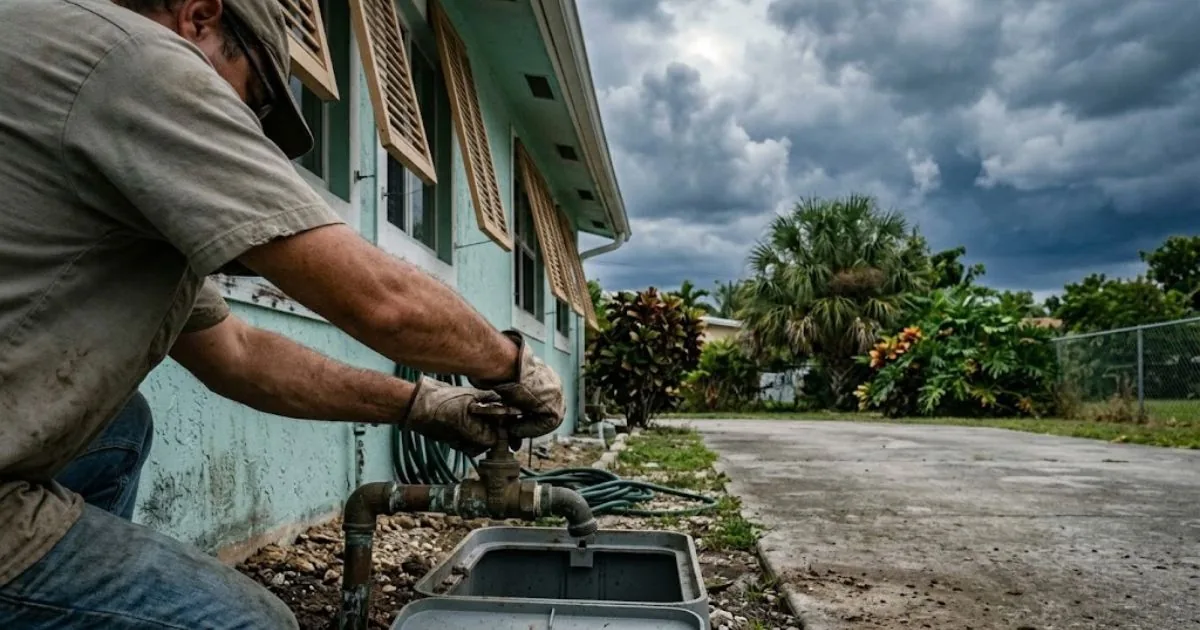
The Pre-Storm Plumbing Checklist
- Find the main water shutoff and test that it closes fully.
- Clear leaves from yard drains, gutters and downspouts so water can leave the property.
- Check that the cleanout cap is on tightly and the area around it is clear.
- Make sure the water heater's relief valve and drain pan are not blocked.
- Take photos of fixtures, appliances and the meter reading for your records.
- Keep the plumber's number and your insurance information in a waterproof bag.
What Storms Do to Plumbing
South Florida storms bring heavy rain, power loss and flooding. Rain raises the water table, which stresses septic drain fields. Power loss shuts off well pumps and lift stations. Flooding can overwhelm sewer systems, and floodwater can push into low drains.
In November 2020, Tropical Storm Eta sent more than twice the normal flow to the regional plant that serves Hollywood, according to city officials. A system under that strain can back up into the lowest fixtures in a house.
Decisions to Make Before the Storm
| Question | Options | Our view |
|---|---|---|
| Shut off the main water? | Close it if you evacuate or expect a long outage | Closing limits damage from a burst pipe while you are away |
| Sewer backflow risk on a low floor? | Backwater valve, plug the lowest drain with a test plug | Ask a plumber what suits your house |
| Septic tank and drain field? | Pump if overdue, keep vehicles off the field | A recent pump gives the tank more room |
| Water heater in a garage? | Check the drain pan, clear the area | Raise stored items off the floor |
| Irrigation? | Turn the system off | Avoids adding water during saturation |
For Septic Owners
About 44 percent of Hollywood relies on septic. If your tank is due for pumping, do it before the wet season peaks, and stay off the drain field. After a storm, ground that is still saturated may not accept more wastewater, so limit water use until it drains. Septic pumping is the simplest prevention.
After the Storm
Do not use tap water until the utility says it is safe if a boil-water notice is in effect. Avoid floodwater, which may contain sewage. If a drain is backing up, stop using water and call.
A camera check of the lateral after a major storm finds cracks that let stormwater in, and emergency sewer line repair addresses them. If water has soaked floors or walls, emergency water damage restoration handles drying before mold starts.
Dania Beach sits on the coast, and our Dania Beach page covers its storm pattern.
Generators, Gas and the Water Heater
Never run a generator indoors or in a garage. Carbon monoxide kills quickly. Keep generators well away from doors and windows and follow the manufacturer's instructions.
If you evacuate, switch the water heater to off or vacation mode and close the gas valve to the heater. If power returns while you are gone, a heater that comes on with a leaking tank can do damage.
When you return, check the area around the heater before restoring power or gas.
Water Safety After the Storm
Utilities may issue a boil-water notice after a storm if pressure drops or a main breaks. Follow it exactly, and use bottled or boiled water for drinking, brushing teeth and food prep until the utility lifts it.
Flush toilets only if the sewer is working, and run each tap for a minute to clear the lines when service returns. If the water looks cloudy or smells odd, wait and check with the utility.
A 72-Hour Plumbing Timeline
- 72 hours before: test the main valve, clear drains and photograph fixtures.
- 48 hours before: pump the septic tank if it is overdue and fill containers with drinking water.
- 24 hours before: secure the water heater area and decide whether to close the main.
- During the storm: avoid using water if the sewer or tank may be overloaded.
- After: check for leaks, wet ceilings and backups, and call for help early.
Condos and High-Rises
Condo owners should ask management what the building does before a storm: whether risers are shut off, how elevators and pumps are handled and who holds keys to units. A leak in an empty unit can flood the floors below before anyone notices.
Leave management a contact number and the name of a local person who can enter your unit. Taking photos of the unit before you leave helps if damage occurs.
Build a Plumbing Record Before You Need One
Walk through the house with a phone and record each room, with a close look at the water heater, under sinks and the laundry area. Narrate the age of fixtures and any recent repairs.
Store the video and your plumber's contact in the cloud and in a waterproof bag. If a storm damages the house, that record supports the claim and shows what was working beforehand.
Add the meter reading and the location of the main valve to the same note.
Renters and Landlords
Renters should ask the landlord where the main valve is and who to call for plumbing damage. A tenant who moves belongings off the floor and reports damage quickly protects the deposit and the claim.
Landlords should confirm sump or drain function, check that exterior drains are clear and keep a contact list of plumbers and restoration companies handy.
Do It Before the Cone Appears
Plumbing preparation works best in May, not when a storm is on the forecast. Test valves, clear drains, pump overdue tanks and record the house. When the cone appears, you will only have to close a valve and make a call.
Insurance Reminders
Flood from rising water needs a separate policy, and flood coverage typically has a waiting period before it takes effect, so do not wait for a storm in the forecast. Florida law generally requires notice of a property claim within one year of the loss.
Call (954) 697-4920 if your plumbing fails during or after a storm.
Questions
Quick Answers
If you evacuate, closing the main limits damage from burst pipes. If you stay, keep it open for drinking water and flushing but know where the valve is.
If the sewer or tank is overloaded, avoid flushing until you know the system is working.
It can protect low floors from a surge, but a plumber should assess your lateral and elevation first.
June 1 through November 30 each year in the Atlantic.
Storm Damaged Your Plumbing?
Call after the storm passes. A dispatcher answers any hour.
Call (954) 697-4920