Does Homeowners Insurance Cover Plumbing Leaks in Florida?
Florida homeowners policies typically cover sudden and accidental water damage from a burst pipe, but often exclude slow or long-term leaks, flood from rising water and the repair of the failed pipe itself. Florida law also bars most property claims unless you notify the insurer within one year of the loss.
What Is Usually Covered and What Is Not
Policies differ, so read yours. This is the common pattern.
| Situation | Often covered? | Why |
|---|---|---|
| Pipe bursts suddenly and floods a room | Usually yes for the damage | Sudden and accidental discharge |
| Repair of the burst pipe itself | Often no | Wear and tear is typically excluded |
| Slow leak over months | Often no | Continuous seepage is commonly excluded |
| Tear-out to reach a hidden leak | Sometimes | Some policies pay for access |
| Flood from rising water | No, needs flood policy | Excluded from homeowners policies |
| Sewer backup | Only with an endorsement | Commonly excluded unless added |
The Florida Deadline You Cannot Miss
According to Florida Statute 627.70132, a property insurance claim or reopened claim is barred unless you give the insurer notice within one year after the date of loss. A supplemental claim has an 18-month limit.
The clock starts on the date of loss, not when you discover the damage. Report early and in writing, and keep a copy of how and when you reported.
What to Document Before You Clean Up
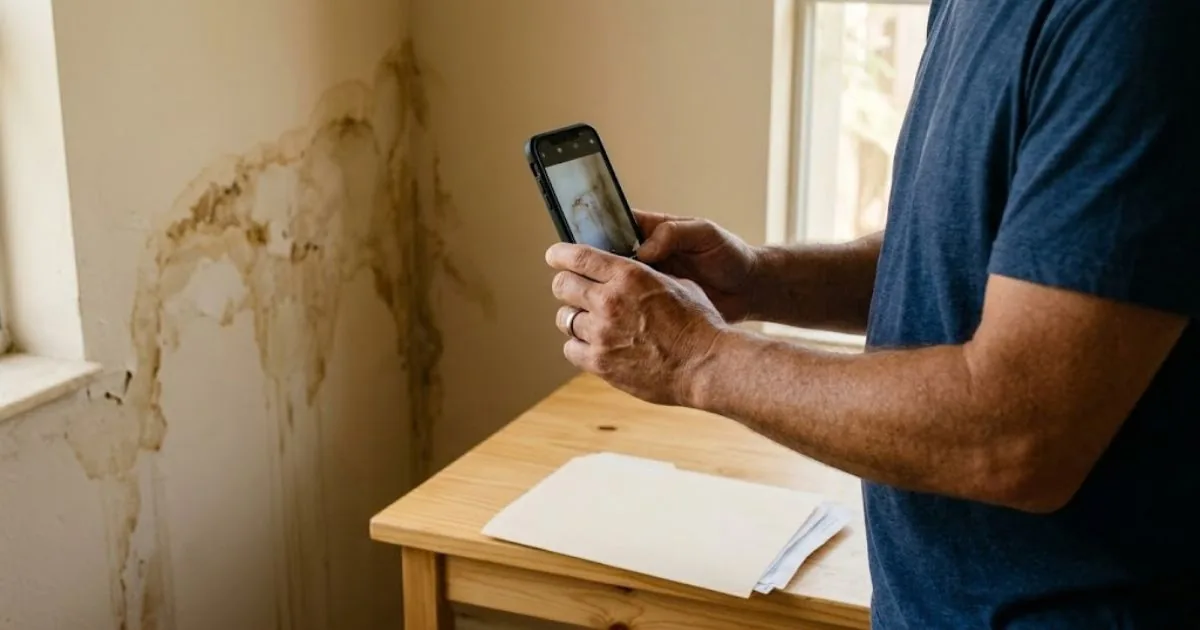
- Photograph and video every wet surface, the failed pipe or fixture and any damaged contents.
- Keep the failed part if you can, since the adjuster may want to see it.
- Save the plumber's report and receipts, including leak detection findings.
- Take meter readings and keep recent water bills.
- Write down the date, time and what you did to limit the damage.
Limiting Damage Is Part of the Policy
Most policies require you to take reasonable steps to prevent further damage. Shutting off the water, moving belongings and starting drying are expected. Delays that let mold spread can reduce a claim.
Residential water damage restoration starts extraction and drying, and records moisture readings that help the claim. A leak detection report is useful evidence of where the water started.
Miramar homes range from 1950s houses to new builds, and policies, deductibles and ages vary widely. Our Miramar page covers local housing details.
The Exclusions That Surprise People
Three phrases cause most disputes. Wear and tear means a pipe that fails from age is the owner's problem, even if the water damage it caused may be covered. Continuous or repeated seepage means a leak that ran for weeks or months can be excluded entirely. Some policies also cap mold coverage at a small amount.
That is why finding a leak fast matters. A report that shows when the leak began, and a fix made as soon as it was found, supports the argument that the loss was sudden and that you acted quickly.
Working With the Adjuster
The adjuster inspects the damage and writes an estimate. Be present for the inspection if you can, and walk the adjuster through every wet area. Hand over the photos, the plumber's report and the receipts for drying.
Ask for a copy of the adjuster's report and estimate in writing. If the estimate looks low, a restoration company or contractor can provide a second estimate for comparison. Keep a log of every call, with the date, the name and what was said.
If a Claim Is Denied or Underpaid
You have options. Ask the insurer to explain the denial in writing and to cite the policy language. Review the policy for the appraisal clause, which can settle disagreements about the amount of the loss.
Florida's Department of Financial Services also runs a mediation program for residential property insurance disputes, and the Department's consumer helpline can explain how to use it. Time limits apply, so do not wait. An attorney who handles property insurance claims can advise on your rights.
Reduce the Odds of a Denied Claim
- Replace washing machine hoses and old supply lines before they fail.
- Fix drips and running toilets promptly and keep the receipts.
- Know where your main shutoff is and use it if you travel.
- Keep the water heater and its pan in good condition.
- Read your policy once a year, especially after a renewal.
How to Read Your Own Policy in Fifteen Minutes
Find the declarations page first. It lists your coverages and deductibles, including any separate deductible for water damage or hurricane. Then find the section on perils, and read the wording around water, discharge, seepage and mold.
Next, locate the endorsements. These add or remove coverage, and they are where sewer backup, water damage limits and service line coverage appear. Note the dollar limits beside each.
Last, find the claim procedures. They state how and when to notify the insurer, what you must do to protect the property and what documents to send. Match them against the Florida one-year notice rule and use the stricter of the two.
If anything is unclear, call your agent and ask for answers in writing. A two-line email now is worth more than an argument later.
Five Questions for Your Agent
| Question | Why it matters |
|---|---|
| Do I have water backup coverage? | Sewer and drain backups are often excluded |
| What is my water damage deductible? | Some policies use a separate or percentage deductible |
| Does the policy pay for tear-out to reach a leak? | Access costs can be a large part of a hidden leak |
| Is there a mold limit? | Mold coverage is often capped |
| Do I have service line coverage? | Buried water or sewer lines are often excluded |
Small Leaks, Big Paperwork
A small claim can raise a renewal premium, so weigh a modest loss against the deductible and the likely effect on your policy. Still, report a loss you are unsure about rather than letting the one-year window pass.
Keep a folder with the policy, the photos, the plumber's report and every receipt. A complete folder makes the claim faster and puts you in a stronger position if the estimate comes in low.
Keep the Evidence Simple
One folder, one set of dated photos and one plain timeline beat a pile of scattered messages. Add the plumber's written cause and the date the repair finished. That folder answers most adjuster questions before they are asked.
A Caution About This Article
This is general information and not insurance or legal advice. Your policy language controls, and only your insurer or a licensed professional can tell you what your policy covers.
If water is flowing now, close the main valve and call (954) 697-4920.
Questions
Quick Answers
Often not for the repair of the failed pipe. It may cover resulting damage and sometimes the access work.
It depends on your policy. Some have separate or higher deductibles for certain perils.
You can usually choose. Keep documentation either way.
A small loss below your deductible may not be worth a claim, but notify the insurer if you are unsure.
Need the Leak Documented for a Claim?
Call and ask for a written report of the cause.
Call (954) 697-4920