What Is a Sewer Cleanout and Where Is Yours?
A sewer cleanout is a capped pipe, usually in the yard or beside the house, that gives a plumber direct access to your main drain line. Knowing where it is saves time in an emergency, and a missing or buried cleanout makes a backup harder and more expensive to clear.
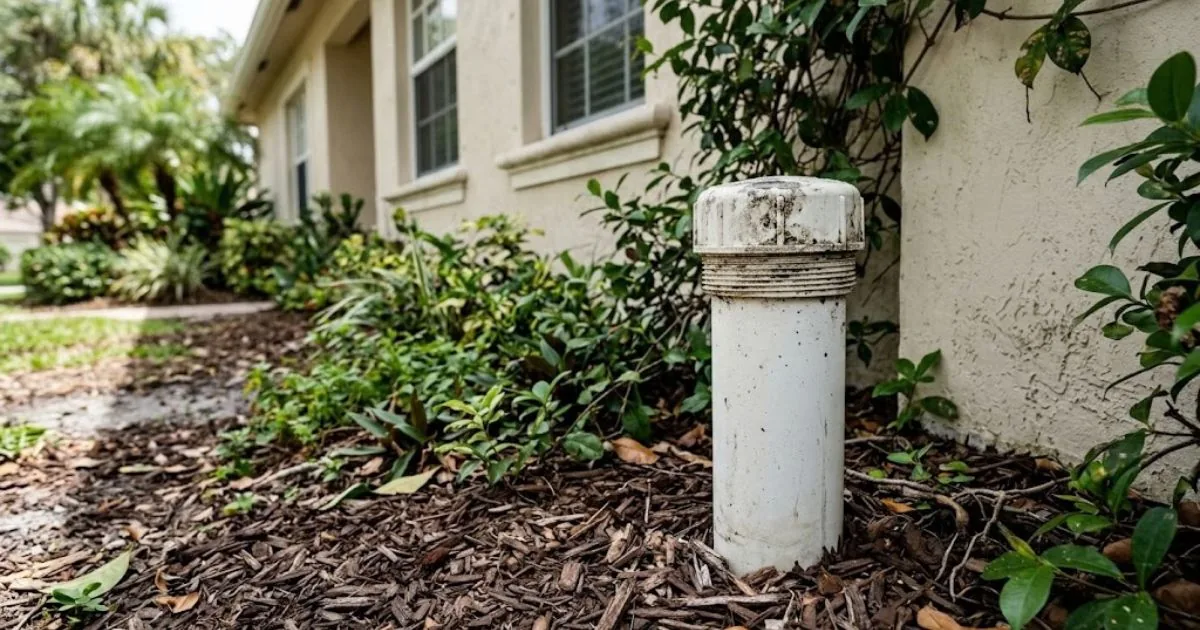
Where to Find It
| Where to look | What it looks like | Notes |
|---|---|---|
| Beside the house, near an exterior wall | A 3 or 4 inch pipe with a threaded cap, flush with the ground | Often near where the main line exits the house |
| Near the property line | A capped pipe in a small box | Sometimes marks the end of the owner's line |
| In the garage or utility room | A capped pipe in the floor or wall | Common in slab homes |
| Inside a garden bed | A cap hidden under mulch or plants | Probe gently with a stick |
| Condo or apartment | Usually in a common area | Ask management |
Why a Cleanout Matters
A cleanout lets a plumber send a cable or camera into the main line without removing a toilet. Without one, the plumber has to pull a toilet or climb to the roof vent, which adds time and risk.
The Florida Building Code, Plumbing, which follows the International Plumbing Code (IPC), requires accessible cleanouts on building drains. If you cannot find one, an experienced plumber can often locate it or recommend adding one.
What Not to Do
- Do not open a cleanout cap if sewage is under pressure behind it. It can spray.
- Do not pour chemicals into the cleanout.
- Do not bury the cap in concrete or deep mulch.
- Do not remove a cap without a plan for the water inside.
- If water stands in the cleanout pipe, close it and call a plumber.
Reading the Signs a Cleanout Gives You
Water standing in an open cleanout means the blockage is downstream of it, in the lateral or the municipal main. Water that drains normally at the cleanout means the clog is upstream, inside the house.
That split decides who repairs it. If the blockage is in the lateral, a camera shows the cause, and sewer line repair work fixes cracks or roots. For repeat clogs from roots or grease, professional hydro jetting can clean the pipe wall.
If You Are on Septic
Septic homes have a cleanout too, on the line between the house and the tank. Many Hollywood properties use septic, so finding it ahead of time helps.
Pembroke Pines houses range from the 1950s to the 1990s, and the cleanout may sit in different places depending on when it was built. Our Pembroke Pines page explains the pattern.
What a Plumber Does With the Cleanout
With the cap removed, the plumber sends a cable or a camera down the line. The camera shows roots, grease, scale or a break, and the plumber can see how far from the cleanout it sits. A cable then clears the blockage, or a jetter scours the walls.
Having a cleanout turns a long, messy job into a short one, because the toilet stays where it is. It also gives the plumber a place to check flow after the work is done.
Adding or Replacing a Cleanout
If your house has no accessible cleanout, a plumber can install one on the main line, usually near the house or at the property line. The work needs a short excavation and a pipe fitting, and it may require a permit.
A damaged or buried cap is a quick fix. Replace a cracked cap and raise a buried one to grade, with a small access box or marker. These small jobs make later service faster.
Make It Easy to Find
- Take a photo with a landmark in the frame and save it.
- Keep the cap clear of mulch, dirt and landscaping.
- Mark the spot with a small paver or a garden stake.
- Write the location on a note kept with your home records.
- Tell a spouse or housemate where it is.
Condos, Townhomes and Shared Lines
In multi-unit buildings, cleanouts are often in common areas or in a maintenance room. A single main may serve several units, so a blockage can back up into the lowest unit. Ask management where the cleanouts are and who is authorized to open them.
If your unit backs up while neighbors are fine, the problem is probably in your branch. If several units back up, the shared line needs work.
Cleanouts and Tree Roots
Roots are the most common reason a cleanout earns its keep. They enter small cracks and joints, grow into a mass and trap paper and grease. A camera through the cleanout shows the root mass, how far it extends and where the pipe is damaged.
Cutting roots restores flow for a while, and they regrow if the joint stays open. If the camera shows a cracked or offset section, repair is the lasting answer. Planting large trees away from the line also helps.
Mark the line's path in your records. Before any digging, a utility locate service marks buried lines, which protects your pipe and the neighbors' too.
Keep a Simple Home File
A one-page file helps every plumber who visits. Note the cleanout location, the pipe material if known, the date of the last camera inspection and any repair. Add the photo of the cleanout and the water main valve.
Store it where you can find it quickly, and share it with a trusted neighbor or a family member who might handle a problem while you travel.
Ten Minutes This Weekend
Walk the outside of the house, find the cleanout, take a photo and note it in your home file. If you cannot find one, mention it to the next plumber who visits.
That small effort shortens the first call of a future emergency.
What the Cap Tells You
A cap that is cracked, missing or sunken lets soil and water into the line. A cap that is clean and snug does its job. Check yours twice a year, and replace one that has failed, since it is cheap and fast to fix. If the cap is stuck, call a plumber instead of forcing it, because a snapped fitting turns a small job into a bigger one.
Make the Call Easier
Take a photo of your cleanout and save it on your phone. When you call (954) 697-4920, tell the dispatcher where it is.
Questions
Quick Answers
Most newer houses do. Older homes sometimes do not, and one can be added.
Yes. A plumber can install one on the main line, usually near the house.
No. The cleanout is on the pipe. The septic lid covers the tank.
Do not force it. Corroded or over-tightened caps are best removed by a plumber.