Water Heater Leaking From the Bottom: Repair or Replace?
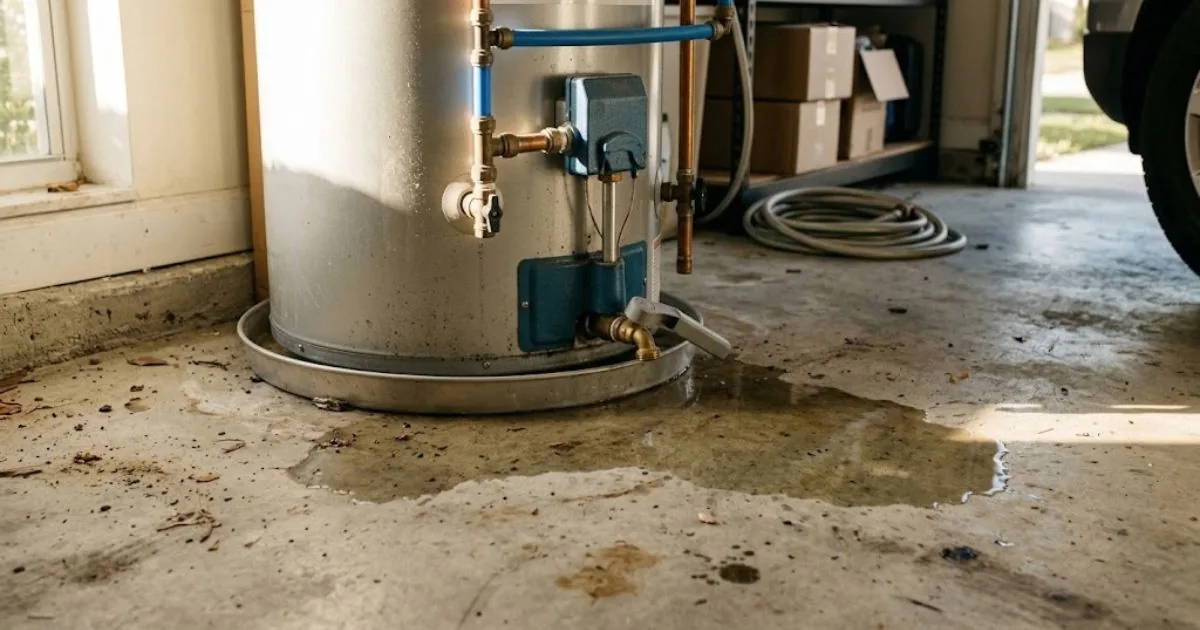
A water heater leaking from the bottom usually means one of three things: a loose fitting or drain valve that can be fixed, a relief valve discharge that needs attention, or a failed tank that has to be replaced. Shut off power or gas and the cold water supply first, then work out which one it is.
Shut It Down Before You Diagnose
- Turn off the breaker for an electric heater, or set the gas control to off for a gas heater.
- Close the cold water supply valve above the tank.
- Open a hot tap in the house to relieve pressure.
- Do not touch the relief valve discharge pipe, which can be hot.
- Photograph the leak and the nameplate, which shows the age.
Where the Water Is Coming From
| Where it drips | What it likely is | Repair or replace? |
|---|---|---|
| Pipe fittings on top | Loose or corroded connection | Usually repair |
| Drain valve at the base | Worn drain valve | Repair, inexpensive |
| Pipe running from the relief valve | Excess pressure or a failing valve | Replace the valve and check pressure |
| Thermostat or element gasket (electric) | Loose or worn gasket | Usually repair |
| Seam or bottom of the tank | Corroded tank shell | Replace the heater |
Why a Leaking Tank Shell Is Final
Inside a tank heater, a steel tank is lined with glass and protected by a sacrificial anode rod. When the rod is used up, the steel rusts, and a rusted tank weeps from the seams. No patch holds against the pressure and heat inside.
Hard water shortens the life of a heater. One home maintenance source says hard water can reduce a heater's life by two or more years, and flushing the tank yearly and replacing the anode about every five years helps. In Hollywood, water drawn from the Biscayne Aquifer is treated with lime to reduce hardness, but scale can still collect.
What the Code Says About Replacement
Florida plumbing work follows the Florida Building Code, Plumbing, which is built on the International Plumbing Code (IPC). The code calls for a relief valve with a discharge line and, where a leak could damage the building, a drain pan with a drain.
A replacement normally needs a permit and an inspection, and the installer should say who pulls it. If your heater sits in an attic or a second-floor closet, the pan and drain matter even more.
Repair or Replace in One Minute
If the leak is at a fitting or valve and the heater is under ten years old, repair makes sense. If the leak is from the tank body, replace it.
If the unit is past ten years and needs a pricey part, a new heater usually costs less over the next five years. Our emergency water heater repair visits start with both prices so you can compare.
Water around the heater can also come from a plumbing leak nearby, and hidden leak testing separates a tank leak from a supply line or slab leak. Many Pembroke Pines homes keep the heater in the garage, and our Pembroke Pines page covers what to check there.
Gas and Electric Heaters Leak Differently
An electric heater leaking from a gasket or element is a power hazard, because water can reach the wiring. Cut the breaker before you touch anything near the unit, and never stand in water to do it.
A gas heater adds a combustion risk. Water on the burner assembly can put out the pilot, and a unit that relights after a leak should be checked before use. If you smell gas at any point, leave the house and call 911 and the gas utility from outside.
In both cases, the first move is the same: stop the energy, close the cold water valve and let a professional inspect the unit.
What a Replacement Visit Involves
A replacement starts with sizing. The installer matches capacity and fuel type to the household and the existing connections. Venting, gas lines, electrical supply and the drain pan are checked against the plumbing and mechanical code.
Then the old unit is drained, disconnected and removed. New supply connectors, a relief valve discharge line and a drain pan are installed as the code requires. The new unit is filled, the air is bled from the lines, and power or gas is restored.
After the installation, the tank is tested for leaks and the temperature and pressure relief valve is checked. Ask for the permit number if the job needed one, and keep the paperwork for your records and for the next buyer.
What Affects the Cost of a New Heater
Insurance often pays for sudden water damage from a failed tank but not for the heater itself. Keep your photos and the plumber's report.
Thermal Expansion and Why It Matters
In a closed plumbing system, heated water expands and has nowhere to go. That raises pressure, which stresses the tank and can make the relief valve drip. An expansion tank absorbs the extra volume.
Some homes need one, particularly where a backflow device or pressure-reducing valve closes the system. If your relief valve drips after every heating cycle, ask a plumber to check the pressure and whether an expansion tank is missing or waterlogged.
Insurance and Documentation
A leaking heater can damage floors and cabinets. Photograph the leak, the data plate and the damage before you clean. Keep the old unit or the failed part if you can, since an adjuster may ask to see it.
If You Are Unsure, Treat It as the Tank
When you cannot tell where the water comes from, assume the worst and shut the heater down. A short outage costs less than a flooded closet. A technician can then separate a loose fitting from a failed shell in a few minutes.
Dry the Area
Garage and closet floors hold water against drywall and cabinets. Dry the area within a day or two, run a fan and watch for musty smells. If water spread beyond the closet, call for help.
For an active tank leak, call (954) 697-4920.
Questions
Quick Answers
No. Shut it off and close the cold valve. A leaking tank can fail without notice.
Not reliably. Tank shell leaks mean the heater has reached the end of its life.
Either pressure or temperature is too high, or the valve is failing. Both need attention.
Most replacements take a few hours, depending on venting, permits and access.
Water Heater Leaking Right Now?
Cut power or gas, close the cold valve and call.
Call (954) 697-4920