How Long Does a Water Heater Last in South Florida?
Most tank water heaters last roughly 8 to 15 years, depending on the source and the unit, and tankless models often last 20 years or more. South Florida's mineral-rich water, salt air and heat can pull a tank toward the short end, so age is only one of the clues to watch.
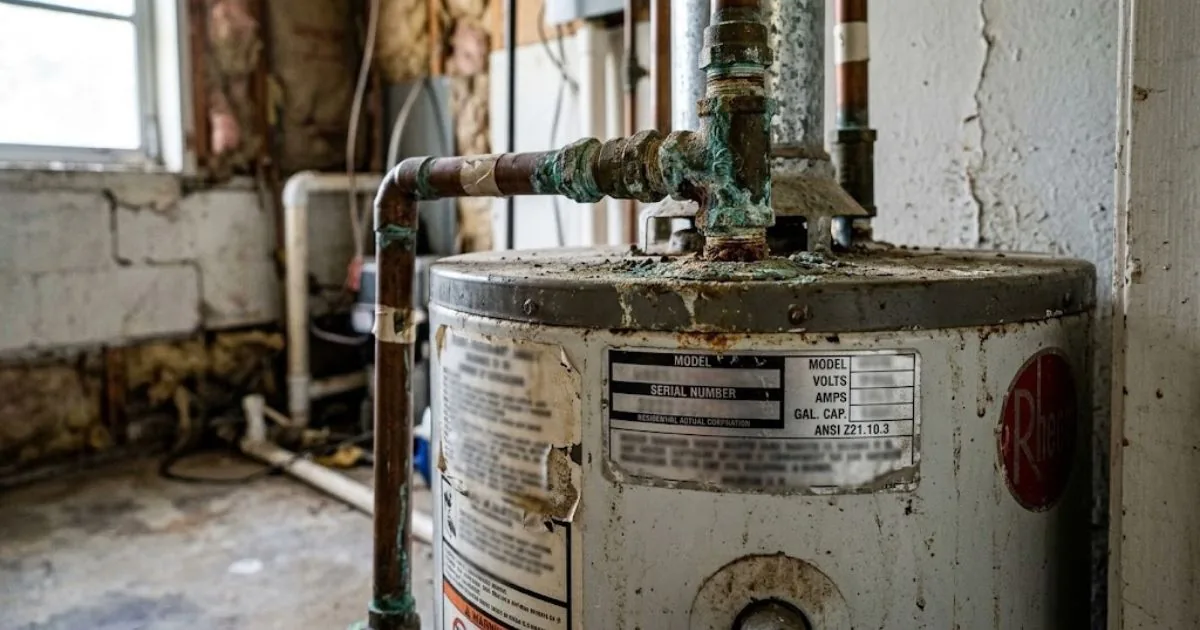
Typical Lifespans by Type
| Type | Commonly cited range | What shortens it |
|---|---|---|
| Gas tank | 8 to 12 years | Sediment, burner scale, poor venting |
| Electric tank | 10 to 15 years | Mineral scale on elements, anode failure |
| Tankless | 20 years or more | Scale if never descaled |
These ranges come from published consumer sources, and they vary. Treat them as planning numbers, not guarantees.
What Wears Heaters Faster Here
Hollywood's water comes from the Biscayne Aquifer, a limestone and sand formation. The city treats it with lime and ferric chloride to reduce hardness and color, but water that passes through limestone can still leave scale. One home maintenance source says hard water can shorten a heater's life by two or more years.
Salt air near Hollywood Beach and the Intracoastal speeds corrosion on supply connectors and the tank jacket. Heat plays a role too, since garage and closet heaters in July run in hot ambient air.
Condo heaters add a wrinkle. Under Florida's Condominium Act, the unit owner generally insures the water heater inside the unit, so the replacement timing is usually your decision.
Warning Signs the End Is Near
- Rust-colored hot water, especially in the morning
- Popping or rumbling from the tank
- Water around the base or damp spots on the floor
- Hot water that runs out faster than before
- A unit older than ten years with a rising list of repairs
- Corroded fittings or a crusty relief valve
Three Habits That Add Years
Flush the tank once a year to remove sediment. Open the drain valve to a hose and let the water run until it clears.
Check the anode rod, which is sacrificial, about every five years in hard-water areas. A depleted rod means the tank is next.
Keep the area around the heater clear, set the thermostat near 120 degrees and test the relief valve once a year as the manufacturer directs.
Plan Replacement Before the Emergency
A heater that fails on a Saturday night costs more in stress and in after-hours rates. If yours is past ten years, plan the replacement and compare prices on your own schedule. A water heater repair visit can tell you how much life is left in a unit before you decide. A replacement must meet the Florida Building Code, Plumbing, which is built on the International Plumbing Code (IPC), including the relief valve discharge and the drain pan.
A leak from the tank body is also a reason to look for other leaks. Residential leak detection confirms whether the water came from the heater or from a nearby line. Hallandale Beach condos have their own ownership rules for in-unit heaters, covered on our Hallandale Beach page.
How to Read the Age on Your Heater
The age is printed on the data plate, usually on the side of the tank. Most manufacturers encode the date in the serial number. Many brands use a letter for the month and two digits for the year, so a number starting with a letter followed by 14 often means a 2014 build.
Codes differ between brands, so look up the manufacturer's decoder if you are unsure. A plumber can read the plate in seconds.
If the plate is unreadable, estimate from the installation date on your permit or paperwork, or from the age of the house if it never changed.
Tank, Tankless or Heat Pump: A Plain Comparison
| Factor | Tank | Tankless | Heat pump |
|---|---|---|---|
| Upfront cost | Lowest | Higher | Highest |
| Hot water supply | Limited by tank size | Continuous on demand | Limited by tank size |
| Space | Needs floor space | Wall mounted | Needs floor space and airflow |
| Maintenance | Flush yearly, check anode | Descale, clean filter | Clean filter and condensate line |
| Hard water concern | Sediment and scale | Scale on the heat exchanger | Sediment in the tank |
Which fits depends on household size, available space and budget. A replacement is a good time to ask about each.
A Simple Maintenance Calendar
- Every month: look at the base and fittings for dampness or rust.
- Every year: flush the tank and test the relief valve as the manufacturer directs.
- Every three to five years: inspect the anode rod, sooner in hard water.
- After a power or storm event: check for leaks and the pilot or breaker.
- At year ten: get a professional assessment and plan the replacement.
When Repair Still Makes Sense on an Older Heater
Age alone does not condemn a heater. A ten-year-old unit with a worn thermostat or a bad element can run a few more years, and a repair costs far less than a new heater.
The trouble starts when repairs stack up. A second repair within a year, or a repair that costs a large share of a replacement, tilts the math toward a new unit. A leak at the tank body ends the debate.
Ask for both numbers and decide with the whole picture. A newer heater is also more efficient, and efficiency savings add up over its life.
If you plan to sell, a working heater with its paperwork is a small selling point. A heater that fails during a buyer's inspection becomes a negotiation.
Heaters in Seasonal and Rental Homes
A heater that sits idle for months can develop leaks or sediment problems. Seasonal homeowners should flush the tank when they arrive and look for leaks before turning the system on.
Rental owners should keep service records and replace aging units on a schedule. A failure between tenants can go unnoticed for weeks, so a drain pan with a leak alarm is a low-cost protection.
Putting It Together
Read the age on the plate, flush the tank each year and look for rust, noise and moisture at the base. If the unit is past ten years, get a quote now so a replacement is a choice and not a scramble.
In South Florida's conditions, the careful owner treats the label age as a warning and not a promise. A tank that has been flushed and checked often lasts longer than its neighbor that was never touched.
Get a Real Assessment
Bring the model number and the age from the label. A plumber can read the date code and explain what repair or replacement would cost. Call (954) 697-4920 any hour.
Questions
Quick Answers
Not necessarily, but it is entering the range where failure becomes more likely. Check for leaks and rust.
Often yes, if they are descaled regularly. Scale shortens any heater in hard water.
The serial number on the label encodes the date. The manufacturer's site decodes it.
Yes, when the leak is at a fitting or the problem is an element or thermostat. A tank body leak means replacement.
Heater Past Ten Years Old?
Call with the model number and age for a straight answer.
Call (954) 697-4920