Garbage Disposal and a Septic System: What You Need to Know
You can use a garbage disposal with a septic tank, but it adds solids that fill the tank faster and may shorten the time between pumpings. If your Hollywood home is on septic, treat the disposal as an occasional tool, not a trash can.
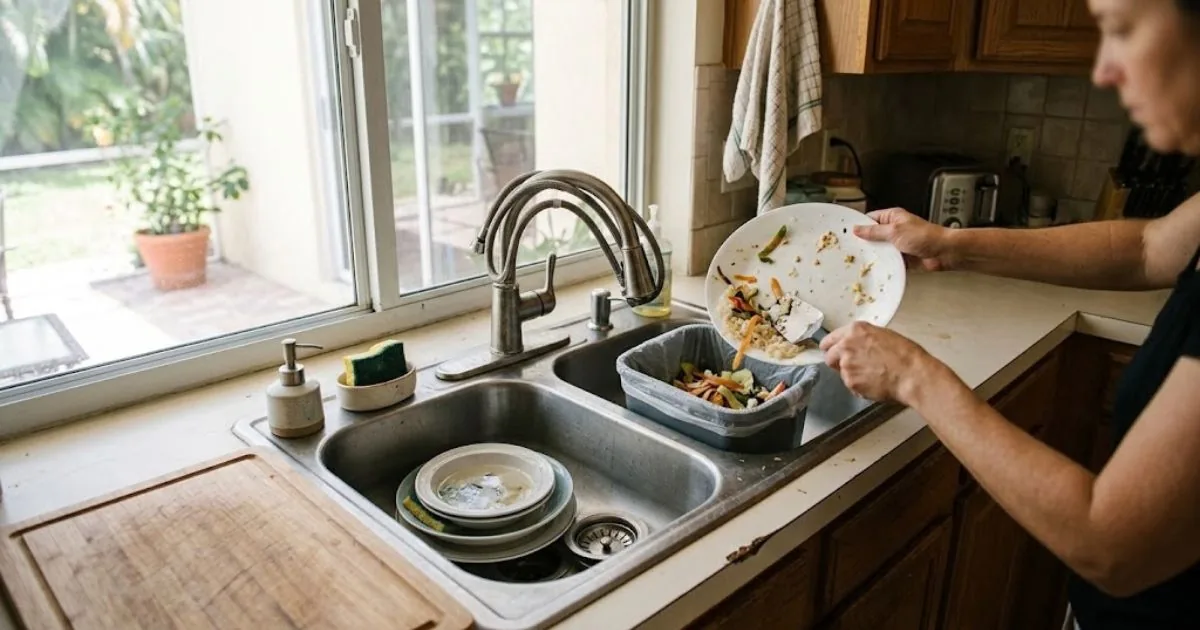
What the Disposal Adds to Your Tank
| Habit | Effect on the tank | Better choice |
|---|---|---|
| Grinding food scraps daily | Extra sludge builds up | Scrape plates into the trash |
| Pouring grease or fat down the drain | Forms scum, can clog the outlet | Collect grease in a can and discard |
| Coffee grounds and eggshells | Settle as grit | Compost or trash |
| Flushing wipes labeled flushable | Do not break down | Trash can |
| Heavy bleach or drain cleaner use | Harms tank bacteria | Plunger, enzyme cleaner, cable |
How a Disposal Changes the Pumping Schedule
The EPA says most household septic tanks need pumping every three to five years and an inspection at least every three years. A garbage disposal in daily use adds solids and tends to move you toward the short end of that range.
A larger household makes the same shift. If you moved in without pumping records, pumping and inspecting once gives you a baseline.
Why It Matters in Hollywood
About 44 percent of Hollywood still relies on septic tanks, according to the city's Public Utilities Department. The city's sewer conversion is a 25-year project that begins in 2032, so most septic homes will keep their tanks for years.
A tank that fills quickly sends solids toward the drain field, where clogging is expensive to fix. South Florida's high water table in summer leaves less room for error.
Septic-Friendly Kitchen Habits
- Scrape plates into the trash before washing.
- Run the disposal with plenty of cold water, and only for small amounts.
- Skip bones, peels, pasta, rice and fibrous vegetables.
- Never pour grease, oil or paint down the drain.
- Use septic-safe soaps and cleaners in moderation.
- Spread laundry loads across the week.
Signs the Tank Is Struggling
Slow drains in every fixture, gurgling pipes, a sewage smell outside and soggy ground above the field are the classic signs. If you see them, call for household septic tank pumping and an inspection.
If only the kitchen sink drains slowly, the cause may be a clog in the line to the tank, and drain cleaning and unclogging is the right call. Pembroke Park properties vary, and our Pembroke Park page explains how to confirm if yours is septic.
Quick Reference: What Goes Down the Drain
| Item | Septic-safe? | Notes |
|---|---|---|
| Toilet paper | Yes | Use septic-safe brands that break down quickly |
| Food scraps | Sparingly | Adds solids, trash is better |
| Grease and oil | No | Solidifies and clogs |
| Wipes, even flushable | No | They do not break down |
| Medications | No | Harms bacteria and the environment |
| Paint, solvents, chemicals | No | Never |
| Small amounts of mild soap | Yes | Avoid heavy antibacterial use |
Protect the Bacteria That Do the Work
A septic tank works because bacteria break down waste. Strong bleach, drain openers and antibacterial products in large amounts can reduce that population and slow the process.
Normal household cleaning, used in moderation, is fine. Spread out laundry so hot, soapy water does not arrive all at once, and avoid sending every cleaner in the house to the tank on the same day.
Alternatives to the Disposal
A kitchen compost bin or a small countertop container for scraps keeps solids out of the tank entirely. Many homeowners find the habit easy within a week. Scrapes go to a compost pile, a municipal food waste program if one exists, or the trash.
If you rent, ask the landlord whether the disposal can be disabled. If you own, you can leave the unit installed and simply use it very rarely.
Landlords and Tenants on Septic
A tenant in a septic house should know the tank exists and what not to flush. Landlords should keep a short written guide and the pumping schedule. A tenant who flushes wipes or grease can cause a backup that the landlord has to pay for.
Clear written rules and a recent pumping record are the best protection for both sides.
What a Septic Inspection Looks For
An inspection finds the tank, opens the lid and measures the sludge and scum layers. The inspector checks the inlet and outlet baffles, which keep solids from leaving the tank, and looks at the water level for signs of backflow from the drain field.
If the tank has a filter on the outlet, it is cleaned. The inspector also looks at the drain field area for soggy spots, odor and unusually lush grass, which can mean effluent is surfacing.
Ask for a written report with measurements and photographs. That report tells you when the next pumping is due, and it is useful when you sell.
Three Septic Myths Worth Dropping
The first myth is that a tank never needs pumping if it has not backed up. Solids build up silently, and by the time a backup shows, the drain field may already be at risk.
The second is that additives replace pumping. The EPA says a healthy tank does not need them, and some products can harm it. Pumping removes what bacteria cannot digest.
The third is that yeast or a daily flush of a product keeps the tank clean. There is no evidence these replace professional care. A pump and inspection every few years is what works.
A Realistic Plan for Septic Owners
Put a pumping date on the calendar, scrape plates into the trash and keep grease out of the drain. Keep wipes out of the toilet and spread laundry across the week.
Those habits cost nothing and give the tank years of extra life. With the city's sewer project not starting until 2032, most Hollywood septic owners will rely on the tank for a long time.
Signs Your Habits Are Working
Drains stay quick in every fixture, the yard stays dry over the field, and the pumping report shows modest sludge. Those three signs mean the tank is keeping up. If any of them changes, call before the change becomes a backup.
Share the same rules with guests and family so one careless flush does not undo years of care.
When to Call
Call at the first sign of slow drains in more than one fixture. For a backup, call (954) 697-4920 and tell the dispatcher the home is on septic.
Questions
Quick Answers
Yes, and for septic systems that is often the best choice.
The EPA says additives are not needed for a healthy tank, and some can harm it. Pumping is what keeps a tank healthy.
Not meaningfully. What matters is how much you put in it.
Check your bill for a sewer charge, look for a lid in the yard or ask the city's Public Utilities Department.